
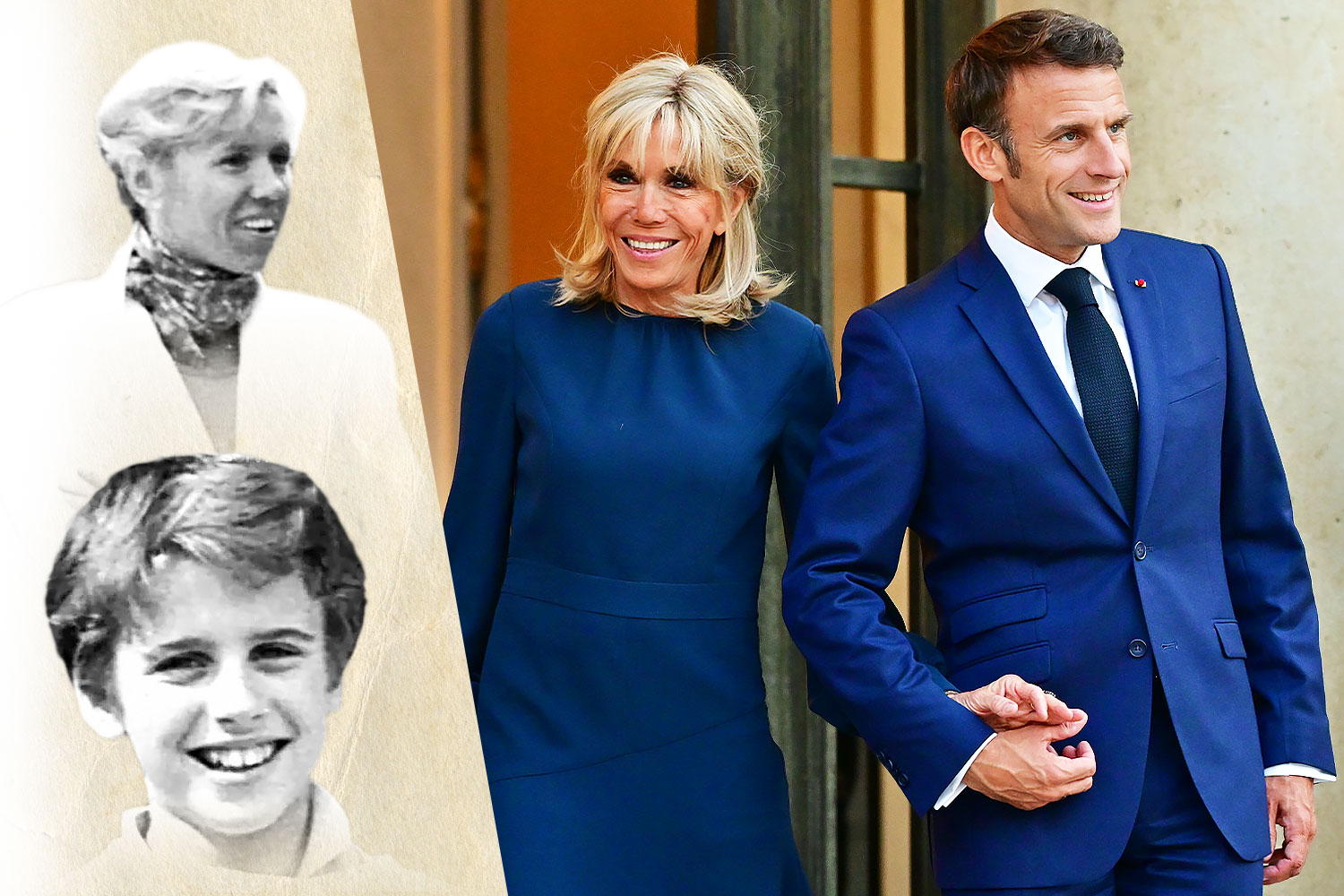
Brigitte Macron’s early years in Amiens, France reveal the trajectory of someone who became a global figure decades after her formative period, having built a teaching career and raised a family before entering the political spotlight as France’s First Lady. Born Brigitte Trogneux, she grew up in northern France in an environment that shaped her eventual path into education and, much later, into one of the world’s most scrutinized public roles.
The interest in her younger days reflects broader curiosity about how conventional early chapters connect to extraordinary later ones.
The Context Of Growing Up In Northern France
Brigitte spent her childhood and teenage years in Amiens, a city in northern France with historical significance and a quieter pace compared to Paris. This regional setting provided the backdrop for her formative experiences and education.
The city itself carries weight in French cultural geography, positioned far enough from the capital to maintain distinct regional character. What stands out is how unremarkable her early environment appears, which makes the contrast with her current position more striking.
From a practical standpoint, growing up outside major metropolitan centers often creates a different relationship with ambition and public life. You either feel pulled toward larger stages or you remain rooted in regional identity. Brigitte’s eventual move into national and international visibility suggests the former, though that trajectory took decades to unfold.
Family Background And The Path Through Education
Born into the Trogneux family, Brigitte pursued teaching as her professional path, eventually working as a literature and drama instructor at a Catholic high school in Amiens. Her early career focused on education rather than any public-facing role.
This represents a conventional professional trajectory for her generation and background. Teaching offered stable career prospects and aligned with interests in literature and drama. The reality is that nothing in her early professional choices suggested the dramatic shift that would come later.
What I’ve learned is that career paths often look linear in retrospect but feel uncertain while you’re living them. Brigitte spent years building expertise in education, raising three children with her first husband, and presumably expecting that pattern to continue indefinitely.
The Signals That Emerge From Meeting A Student
Brigitte met Emmanuel Macron when he was fifteen and enrolled in her literature class at La Providence high school, while she was thirty-nine and married. This unconventional beginning has remained a focal point of public discussion about their relationship.
The age difference and student-teacher dynamic create immediate tension with conventional relationship narratives. Initially, Macron’s parents believed he was interested in Brigitte’s daughter, and they sent him to boarding school when they discovered his actual feelings.
Here’s what actually happened according to available accounts: the relationship didn’t formalize until years later, after Macron completed his education and after Brigitte eventually divorced her first husband. The delay represents an attempt to navigate extraordinarily complicated circumstances. Look, the bottom line is that no framework exists for assessing this type of origin story without controversy.
The Reality Of Choosing Between Established Life And Uncertainty
Brigitte had three children with her first husband, André-Louis Auzière, all of whom have pursued successful careers as professionals including a cardiologist, lawyer, and statistical engineer. Leaving that established family structure carried significant personal and social cost.
By her own account, she recognized that pursuing a relationship with Macron would hurt her children, but after delaying the decision for years, she concluded she needed to prioritize her own happiness. This calculation represents the kind of high-stakes personal decision that doesn’t fit neat narratives.
What I’ve seen in similar situations, though rarely this public, is that choosing between established stability and uncertain possibility creates lasting consequences regardless of which option you select. Brigitte chose uncertainty, which eventually led to becoming First Lady of France but only after years of social scrutiny and family disruption.
Why Public Curiosity Focuses On Early Images And Timeline
Interest in photographs from Brigitte’s younger years reflects the disconnect between her age when she became globally visible and the typical pattern of public figures who emerge earlier in life. Most First Ladies enter that role with decades of public documentation already established.
Brigitte became internationally recognizable in her sixties, creating natural curiosity about earlier chapters that weren’t previously documented for public consumption. The search for younger images represents an attempt to construct a complete narrative arc.
From a practical standpoint, this reveals how modern public life assumes continuous documentation from early adulthood forward. When someone enters global visibility later, the absence of that historical visual record creates information gaps that audiences attempt to fill. The dynamics of attention require complete stories, and missing chapters generate their own form of fascination.
