
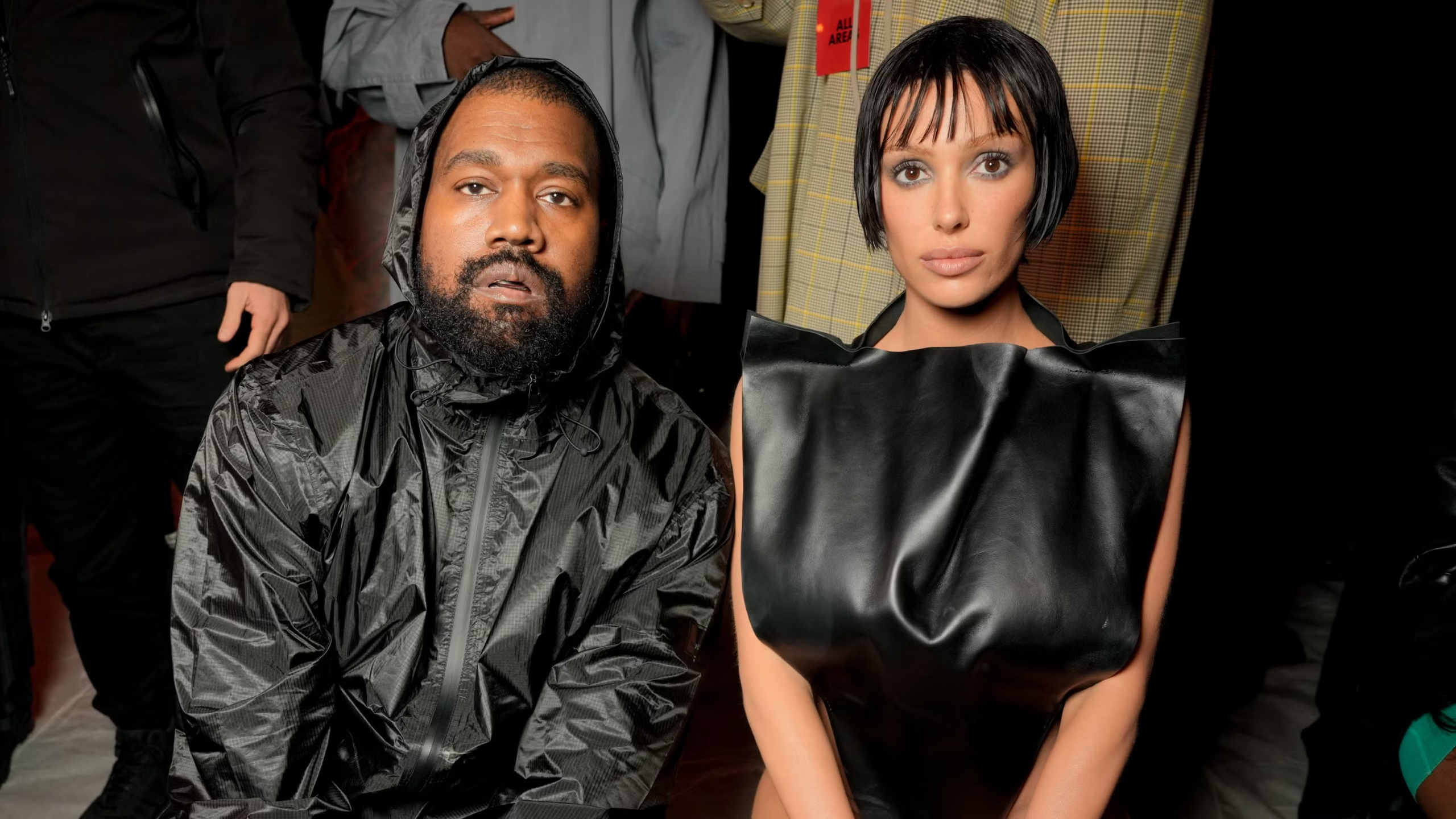
Fashion choices in public settings operate as coded communication, and the ongoing wardrobe selections of Bianca Censori have generated sustained discussion about autonomy, influence, and the boundaries between personal expression and public performance. The Australian architect, married to Kanye West, consistently appears in revealing or unconventional outfits that spark immediate reaction across social media and traditional coverage.
The pattern raises questions about creative collaboration versus external pressure, particularly when family members express concern about behavioral changes.
The Signals Behind Repeated Wardrobe Controversy And Public Response
Censori has appeared at multiple high-profile events wearing minimal clothing, from the near-transparent dress at the Grammys to a leather ensemble at Milan Fashion Week that exposed significant portions of her body. Each appearance generates immediate social media reaction and editorial coverage.
The Milan outfit resembled an oversized bib in black leather, revealing her backside while offering minimal coverage elsewhere, paired with pink knee-high boots. The design choices consistently push conventional boundaries for public events.
What stands out is the repeatability. One controversial outfit might signal experimentation. A sustained pattern across months and multiple events suggests intentional strategy. Look, the bottom line is this creates ongoing conversation, which keeps both individuals in active news cycles regardless of music releases or other professional output.
Family Concern Narratives And What They Reveal About Pressure
Sources close to Censori’s family told media outlets that her parents “don’t recognize her” and believe she wouldn’t act this way without external influence. The concern centers on behavioral changes since her relationship with West began.
These family statements introduce a complicating variable into the public narrative. When relatives publicly express worry about autonomy, it shifts the conversation from fashion choice to relationship dynamics. From a practical standpoint, this adds reputational risk to what might otherwise read as creative expression.
I’ve seen this pattern in business partnerships where one party’s public behavior generates concern from their original network. It creates tension between the new professional identity and the historical personal one. The data tells us that family statements carry particular weight because they come from sources with long-term relationship history.
The Reality Of Creative Collaboration Versus Control Speculation
West has publicly praised Censori’s fashion choices, calling her the “most beautiful woman ever” and describing her wardrobe as intentional design. This framing positions the outfits as collaborative creative decisions rather than imposed choices.
However, the same sources discussing family concern note that West “continues to secure her by giving her more involvement and ownership in various projects, including clothing”. This introduces the question of whether creative collaboration can exist within relationships that feature significant power differentials.
Here’s what actually works in professional partnerships: clear delineation between influence and control, with documented decision-making processes. When that clarity doesn’t exist publicly, observers fill the gap with speculation. The absence of Censori’s own extensive public statements about her wardrobe choices allows multiple narratives to coexist.
How Public Reaction Differs Across Cultural Contexts And Platforms
When Censori wore revealing clothing at a Tokyo event, Japanese social media responded with largely negative reactions. The same outfit that might generate mixed responses in Western contexts faced more unified criticism in a different cultural setting.
This reveals how attention strategy that works in one market creates reputational risk in another. What I’ve learned is that global visibility requires cultural calibration. An approach that generates “buzz” in Los Angeles or Paris might generate offense in Tokyo or other markets with different norms around public dress.
The reality is that when you operate on a global stage, you’re either adapting to local context or accepting that some markets will respond negatively. The couple appears to have chosen the latter, maintaining consistent wardrobe approaches regardless of location.
The Economics Behind Sustained Fashion Controversy As Brand Strategy
Each outfit appearance generates articles, social media discussion, and sustained visibility that extends beyond traditional publicity methods. This represents a specific form of attention arbitrage where controversy substitutes for conventional promotional spending.
From a practical standpoint, one controversial outfit at a major event generates more impressions than a dozen conventional appearances. The metric that matters is reach multiplied by engagement, and controversy consistently outperforms traditional approach in that calculation.
I’ve seen brands attempt this strategy with mixed results. It works when the controversy aligns with brand identity and when the principals appear comfortable with sustained criticism. It fails when the gap between controversy and core offering becomes too wide, or when the principals demonstrate visible discomfort with the response pattern they’ve created.
